

Is Loose Powder Bad for Mature or Rosacea-Prone Skin?
I want to be precise about this one, because the internet is not.
I have nothing against powder. I formulated a powder, I wear one, and I recommend one to women with rosacea. What I want to talk about is a specific format, loose setting powder, and why it behaves badly on skin that is dry, reactive, or somewhere in the hormonal transition.
If your makeup looks worse at noon than it did at eight, and you have been setting it with a loose powder, the powder is a likely culprit. The reason comes down to five things about how loose powder works.
Why Loose Powder Dries Out Mature Skin
Loose setting powders are absorbent systems. That is the whole design brief. Talc, cornstarch, and rice starch are all chosen because they soak up sebum and take the shine down.
And they do take it down, for the first hour or two. That is the part everyone judges the product on, because it is the part you see in the mirror before you leave the house. What happens after is the opposite, and by afternoon the same powder can make your face look heavier, cakier, and shinier than it would have with nothing on it.
The trouble is that absorbent does not mean selective. The powder does not check what it is taking. It takes whatever is available at the surface, and if there is not much oil there, what is available is water.
Through perimenopause and menopause, falling hormone levels reduce sebum production and leave skin drier, and lower estrogen is linked to more water escaping through the skin barrier. Less oil, thinner barrier, slower recovery when anything disrupts it. So you are putting an absorbent on a face that has less to give and less ability to replace what gets taken.
That is the tight feeling at two in the afternoon. You are not imagining it, and your skin is not simply aging on its own schedule. A product is doing exactly what it was designed to do, on a face that cannot afford it.
Loose vs. Pressed Powder: How Much Goes On
This one is pure format.
You dip a puff or a brush into a jar of loose powder. You tap it. Some of it falls off, some stays, some ends up on the counter. Whatever is left is what lands on your face.
Pressed powder is the same kind of powder, compacted into a solid disc and held together with emollients. That binding is the whole difference. A brush picks up a measured amount from the surface, and if you want more you go back for more.
It also changes what lands on your skin. Because the powder is bound, it goes on as a thin, even layer, and you build it up instead of putting down more than you need and hoping it settles. Thin and buildable is the opposite of cakey. Cakey is what happens when too much goes on at once and it is too heavy to stay still through the day.
The difference matters more than it sounds, because with powder the single biggest variable in how it looks at six in the evening is how much of it went on at eight in the morning.
Why Loose Powder Settles Into Fine Lines
Loose powder is loose after it is on your face too. The particles are not bound to anything. They sit on the surface, and over the course of the day, with every expression you make, they migrate downhill, into the lowest point available.
That means the line from your nose to the corner of your mouth. The crease under your eye. The fine lines across your forehead. Powder collects in them and dries there, and by afternoon those lines read as deeper and paler than the skin around them.
This is the specific thing women describe when they say powder ages them, and they are right. It is fine particles following gravity and muscle movement for ten hours.
Pressed powder is bound with emollients. It stays roughly where you put it.
Why Loose Powder Looks Cakey by Afternoon
Making less oil than you used to still means making some, and it comes through in patches. The T-zone still comes through, the sides of your nose still come through, and by mid-afternoon there are areas producing something and areas producing nothing.
It does not take much. A single point of oil meeting loose powder sitting unbound on the surface turns it into a paste, sitting in a layer on top of your skin, and it reads heavy, thick, and shiny in exactly the places you powdered to stop the shine.
That is cakiness, and it is why it never looks the same across your whole face. The parts that went heavy are the parts where oil met powder. The parts that went flat and dusty are where there was nothing to meet it.
This part of the problem happens on oily skin too, and worse, because there is more oil to find the powder. Loose powder is sold as the answer to shine, and it can produce a heavier, shinier version of the thing it was meant to fix.
Then the usual thing happens. It looks heavy, so you try to blend it out, which is more friction, which moves more product into lines. Or you add more powder to the shiny bits, which is more material for the next round of oil to find.
Pressed powder is already bound with emollients, so it is not sitting loose waiting for something to bind to.
Why Loose Powder Can Bother Rosacea
Watch how loose powder actually gets used. It is pressed and rolled into the skin with a puff, or baked, left to sit and then swept off. Both involve pressure, and baking means going over the same skin twice: once to pack it on, and again to brush the excess away.
On rosacea-prone skin that is a problem. Dermatologists tell people with rosacea to avoid rubbing, scrubbing, or massaging the face, because anything that irritates the skin can cause a flare. You are rubbing a reactive face for a full minute to set makeup that is supposed to make the redness less visible. The redness answers.
A soft brush with pressed powder still touches the skin, and that is worth being honest about. The difference is how hard and how often. One light pass in soft strokes, with no pressing and nothing to sweep off afterward, is a very different thing from a minute of pressing and rolling. It is also how the National Rosacea Society suggests applying powder: a soft brush, swept across the compact and onto the face in broad strokes.
Loose powder has a second problem: it stays there. It builds into a thick, heavy layer, and on reactive skin that layer sits for hours. In my experience, that is often when the skin starts to react.
And if the barrier is already compromised, from menopause, from over-exfoliating, from a course of treatment, friction is the last thing it needs.
Menopause and Rosacea: Why They Show Up Together
A lot of the women I work with are dealing with two things at once, and they think they are separate problems.
The redness is one. The skin that changed on them somewhere in their thirties or forties is the other.
They are connected. Estrogen decline weakens barrier function and increases water loss through the skin, and that change can unmask or worsen skin conditions that were previously manageable, rosacea among them. So the flushing that got harder to handle around the same time everything else changed is not a coincidence. I wrote more about that redness in the best foundation for rosacea.
A drying, high-friction absorbent powder sits on the wrong side of both problems at once.
What to Use Instead of Loose Powder
Pressed, vegan, talc-free, and applied with a brush rather than pressed in with a puff.
That is the short answer, and it holds whoever makes the product.
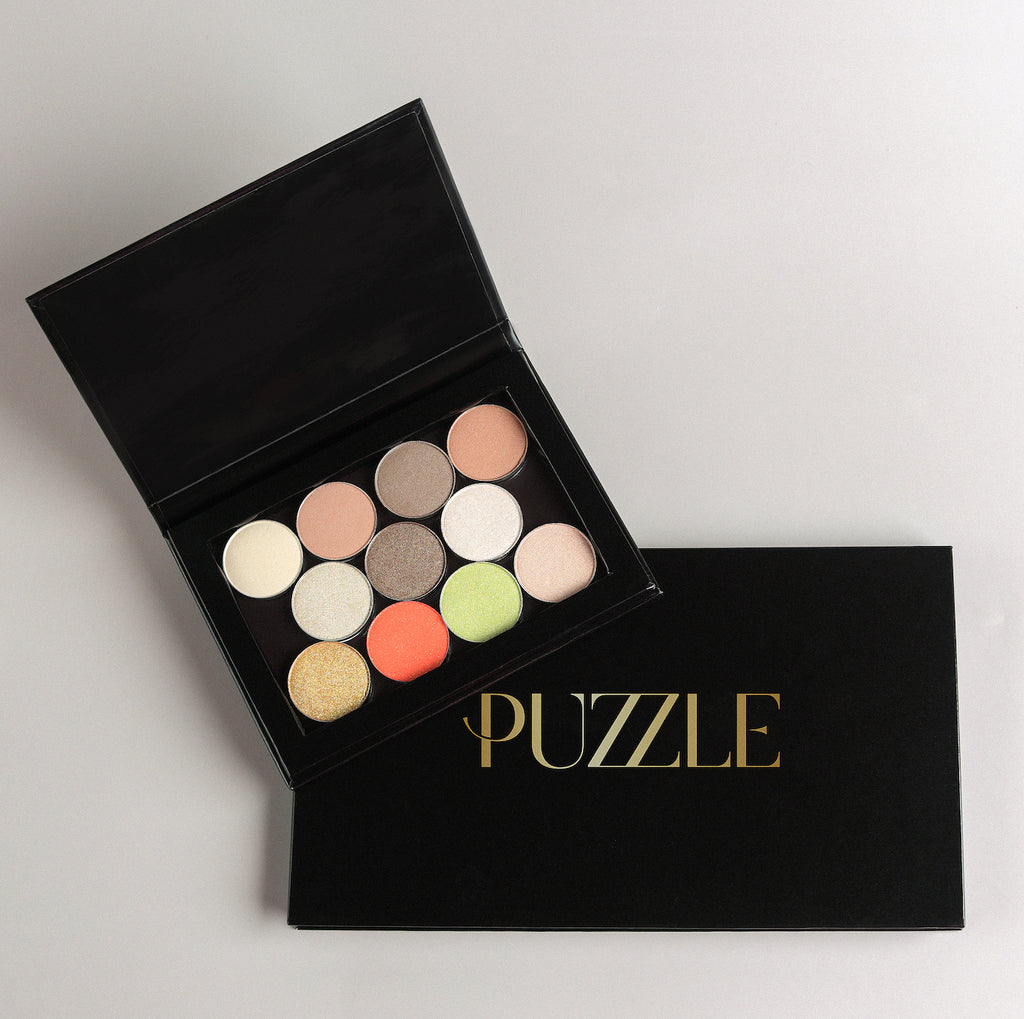
Our Face Powder is what I formulated to that standard. It is pressed, vegan, and talc-free, bound with emollients so it stays where it is put instead of traveling into lines. It uses boron nitride for a soft-focus blur, which gives you the blurring effect without the drying that talc brings. It is anti-caking, non-comedogenic, and it comes in twelve shades starting with White Rose, which is made for redness.
Wear it on its own for light coverage, or over The Overachiever 2-in-1 Tinted Moisturizer X Foundation to set it. It fits the magnetic palette, so it lives alongside whatever else you actually use.
Apply it with the body of a powder brush in soft strokes, starting at the forehead and working down to the chin. Use the body of the brush rather than the tip, and keep it light. I show the full technique in how to apply foundation and powder. The point of pressed powder is that you do not have to press.
Less pressure, more presence.
Avital Founder, Licensed Esthetician and Makeup Artist
FAQ
Is all loose powder bad? It is worst on skin that is dry, reactive, or hormonally changed, which is who this post is for. The caking problem is not limited to that skin, though. Any oil at all turns loose powder into a paste, so oily skin gets a heavier, shinier result from the product sold to fix shine. Different skin, same mechanism.
Is talc bad for mature skin? Talc is part of the problem, because it is a strong absorbent and it is drying on skin that cannot spare the moisture. But a talc-free loose powder still has the other four problems: uncontrolled quantity, migration into lines, caking where it meets oil, and friction on application. Format matters as much as ingredient here.
Why does my powder look dry and flaky by afternoon? It can be the powder, your skincare, or both. A loose absorbent powder sitting on your face for six hours is one candidate. Drying skincare underneath is the other, such as alcohol high on the label, acids used too often, or a moisturizer too light for your skin now. To tell them apart, change one at a time. Wear the same skincare without powder for a few days and see what your skin does at four in the afternoon.
Do I need powder at all? Not necessarily. If your foundation is not sliding or going shiny, you can skip it. Powder earns its place when you want longer wear, a softer focus over texture, or light coverage on its own without foundation underneath. If you do want it, pressed is the format to choose.
Can I use pressed powder if I have rosacea? Yes, with attention to how you apply it. Use a soft brush rather than pressing with a puff, keep the pressure light, and avoid going back over the same area repeatedly. A pressed, vegan, talc-free formula applied this way puts the least friction and the least excess product on reactive skin.
What about setting spray instead? Setting sprays are a different conversation, and I explain it fully in is setting spray necessary. The short version: many long-wear sprays use alcohol as their base, which rosacea patients name more often than any other ingredient as one that burns or stings, and some add fragrance on top.
Can I still use loose powder just under my eyes? That is the worst place for it, unfortunately. The skin there is thinnest, it moves the most, and it is where migration into creases shows first. If you want to set under the eye, use the smallest amount of pressed powder you can manage on a wedge sponge.
Find Your Style
Discover makeup that is professionally selected to empower your everyday look, at any age & every stage.