

The Blush Rule Nobody Told You About When You Have Rosacea
Finding a blush when you have rosacea is one of those things that sounds simple until you actually try it.
You pick something that looks beautiful in the pan. You apply it. And your face looks angrier than it did before you started.
After twenty plus years of working with rosacea-prone skin, I can tell you this is one of the most common things I see. And almost nobody knows why it happens.
It Comes Down to the Pigment Base
Every blush is built on a base, and that base determines how it behaves on rosacea skin.
Blush formulas built on a beige base contain no red pigment. When you apply them to skin that already has pink or red undertones, they sit alongside your natural coloring without amplifying it. The result is that your redness reads as a softer, more balanced flush. It integrates.
Blush formulas built on a red or pink base work differently. That red pigment reads your skin's existing undertones and pulls them forward. If you have any pink, peach, or red in your complexion, a red-based blush amplifies all of it. Your face does not just look flushed. It looks like a flare.
This is why the wrong blush on rosacea skin can make you look noticeably worse with makeup than without it. It is not that blush does not work for you. It is that the pigment base is working against your skin.
The Shades I Reach for on Rosacea-Prone Skin
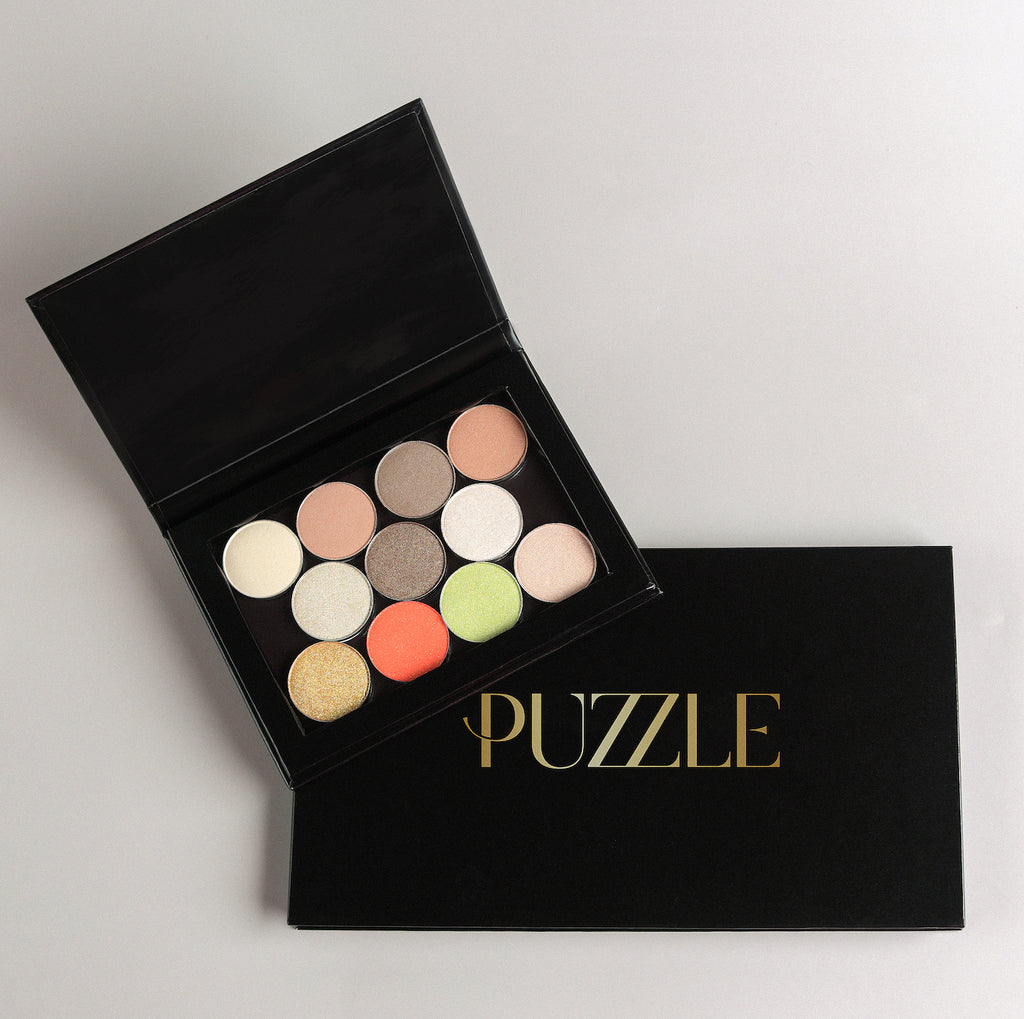
I built the Puzzle blush range with this exact problem in mind. Here is how I think about each shade.
Petal. A light peach tone on a beige base. This is the most forgiving option on the range. If you are new to blush with rosacea, or if you are in a period of frequent flares, start here. It gives you warmth and dimension without pulling your redness forward.
Camellia. A rosy tone, also on a beige base. This one goes slightly pinker than Petal but still integrates beautifully. Soft and wearable on average skin days.
Rose Mist. A richer rosy tone for days when your skin is calm and you want more visible color. Still beige-based. The difference between Camellia and Rose Mist is intensity, not safety.
Peach Lily. A deeper peach for more presence. This is the warm-toned version of Rose Mist. Both are appropriate for rosacea-prone skin. Both are beige-based. Choose based on whether you run cooler (Rose Mist) or warmer (Peach Lily).
One More Thing: Your Highlighter Might Be Your Best Blush
This one surprises people.
If you want the softest possible cheek color, Verbena, Opal Glow, or Pink Sapphire used as a blush works beautifully on rosacea skin. When a highlighter lands on your cheeks, it mixes with your natural redness and creates a tone that is almost impossible to replicate with traditional blush. Soft, glowy pink. Not the saturated red-pink of a blush with too much pigment.
This is one of my favorite techniques for clients who are in a flare and still want something on their cheeks. The luminosity reads as glow, not redness. It is forgiving in a way that most blush formulas are not.
How to Apply Blush When You Have Rosacea
Application matters as much as shade selection. Here is the approach I use with clients.
Start near the ear, not the apple of the cheek. The instinct is to apply blush at the center of the face, right on the apple. For rosacea skin, this deposits the most pigment exactly where your redness is already concentrated. Starting near the ear and sweeping inward gives you more control.
Use the side of the brush, not the tip. The tip of a blush brush concentrates pigment. The side diffuses it. On rosacea skin, diffusion is almost always the right choice.
Sweep downward toward the nose and stop before you reach the center. Stopping at the apple, rather than going past it, keeps the application controlled. The color appears to sit on the upper cheek rather than blending into the redness at the center of the face.
Start lighter than you think you need. You can always build. You cannot easily remove.
Skip circular application entirely. Circular buffing motions deposit more product and generate friction. On reactive skin, that friction alone can trigger visible redness. A single directional sweep is enough.
A Note on Bad Skin Days
Some days, no amount of correct technique makes blush feel like the right call. That is real, and it is worth naming.
On those days, Verbena as a blush substitute is genuinely my first recommendation. It gives your cheeks life without adding any saturated pigment to a face that is already working hard to stay calm. A small amount of highlighter on the upper cheekbone, blended lightly, is enough to make the skin look intentional and healthy without adding to what is already happening.
The goal is never to cover rosacea completely. The goal is to work with the skin you have that day, not against it.
Less pressure, more presence.
Avital | Puzzle Makeup
Find Your Style
Discover makeup that is professionally selected to empower your everyday look, at any age & every stage.